
Biodynamic Craniosacral Therapy
Supporting the expression of your deepest physical, emotional, and spiritual health

Biodynamic Craniosacral Therapy is a gentle, yet powerful, bodywork that supports your body’s natural ability to restore balance and health, reduce stress, build energy, and connect more deeply with life force, purpose, and spirit.
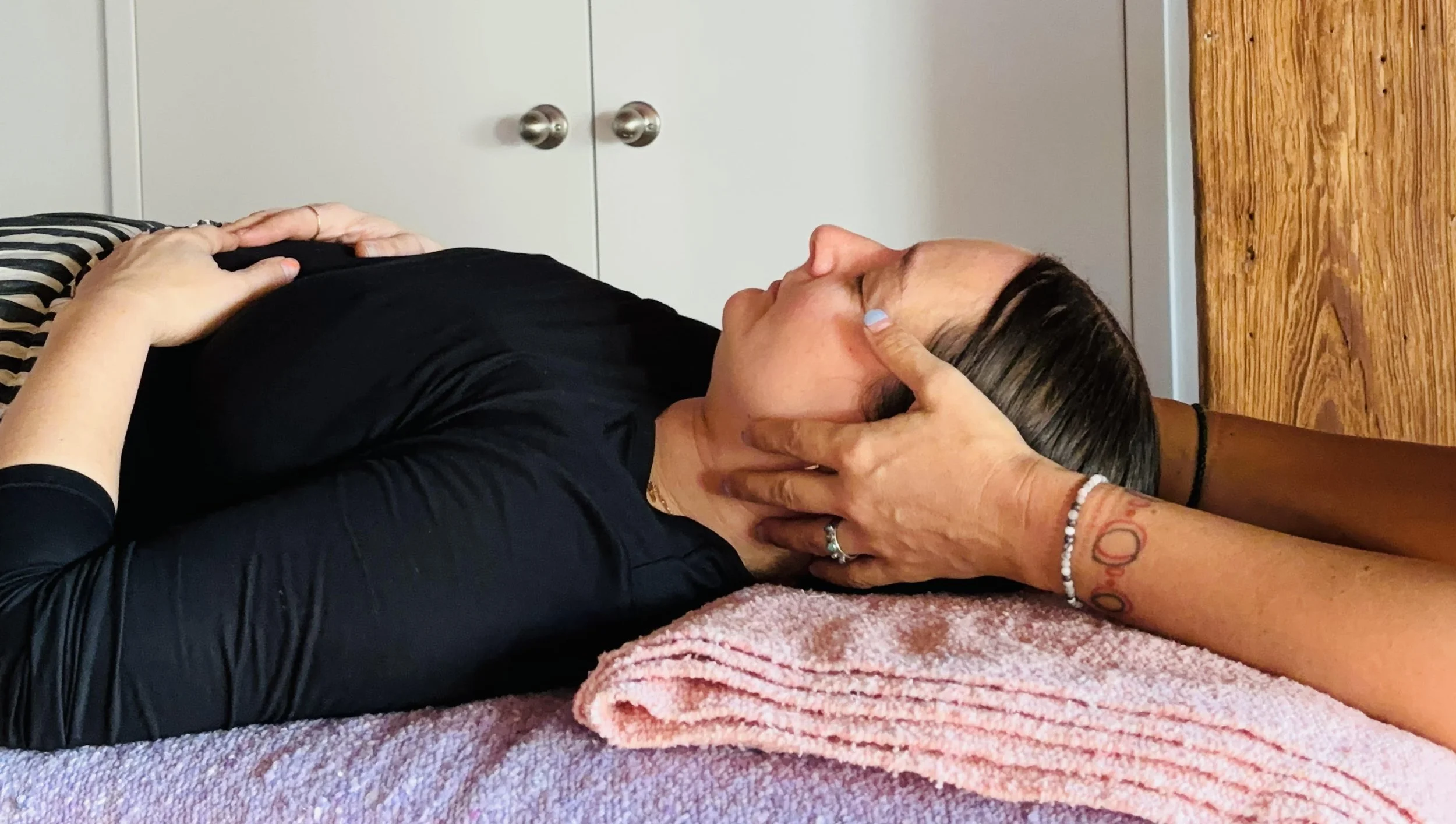

Biodynamic Craniosacral Therapy (BCST)
BCST nurtures profound transformations in physical, emotional, and spiritual well-being by utilizing the energy flow and healing wisdom present in all beings. Over time, clients cultivate a deeper sense of ease, resilience, ability to navigate traumatic experiences, and increased vitality in their daily lives.
The craniosacral system is a physiological system of the body comprised of the cranium, brain, spine, spinal cord, sacrum, connective tissues, and membranes of the central nervous system, and cerebrospinal fluid (CSF). In BCST, this system, supported by your fluid body and driven by primary respiration, is considered to be a primary organizer of health.
Through gentle touch, finely attuned presence, heart-centered listening, and deepening into stillness, a practitioner connects directly with your craniosacral system, fluid body, and primary respiration so that your whole body and being can orient towards its deepest resources and capacities to heal.
What is the fluid body?
The fluid body is a unified field of energy that includes all the body’s fluids and can be perceived as a subtle, energetic form up to 20-24in. around the body.
What is primary respiration?
Similar to our respiratory and cardiovascular rhythms, the fluids of the body also express a subtle, involuntary movement that cycles between inhalation and exhalation, expansion and contraction.
This fluid “breath” or tide is a universal, biodynamic force referred to as primary respiration.
Through listening to primary respiration, and allowing an intrinsic process to unfold, restrictions in the physical body and fluid matrix - including but not limited to the membranes, tissues, and fluid that surround and protect the brain and spinal cord - can be supported to release. This allows not only for improved functioning of the central nervous system but also for a holistic regulation of all body systems including emotional, psychological, and deeper, energetic layers of being.
BCST is a body-led and client-led approach to healing. As it is focused on allowing reorganization to emerge naturally from within the body’s resources, it creates a safe space and pacing for processing traumatic experiences without inviting overwhelm or re-traumatization. When the body can access deep internal resources, physical and emotional holding that is no longer useful can begin to let go, allowing for a more balanced state of body and mind.
BCST is also a healing modality with roots in osteopathic medicine which in turn has roots entwined with Indigenous North American Medicine, particularly that of the Shawnee and Cherokee First Nations peoples. I am passionate about learning more of these roots, deepening my study of indigenous paradigms and practices and to honoring their influence on BCST.
For more on this topic, you can read the statement from the Biodynamic Craniosacral Therapy Association of North America (BCTA/NA) regarding BCST’s lineage here. And further read the article by Ruti Wagaki, on decolonizing the practice of BCST here.
BCST is safe and suitable for any age. .


People come for support with a wide range of acute and chronic conditions including:
back and neck pain
sciatica
chronic pain
fibromyalgia
headaches and migraines
TMJ syndrome
PMS
hormonal regulation
recent injury
repetitive stress and overuse injuries
whiplash injury
digestive issues
irritable bowel syndrome
sleep difficulties
fatigue
post surgery recovery
complementing medical procedures
stress
anxiety
depression
ADHD
trauma & PTSD
meeting life's challenges
enhancing general well-being

Frequently Asked Questions about Sessions
-
Sessions begin with a guided resourcing practice that allows you to access a sense of safety, boundary, and groundedness for the duration of our work together. Preferred pressure of touch and attentional distance is then negotiated to optimally allow for the calming and quieting of the nervous system and the settling of our relational field.
Using finely attuned presence, heart-centered listening, and orienting towards stillness, I connect directly with your primary respiration to help facilitate the emergence of your inherent health and healing power. This occurs by observing subtle rhythms and changes in your system through gentle contact with specific parts of your body including the feet, sacrum, head and back. Supportive dialogue can take place throughout the session. Silence and space for experiencing and processing the work non-verbally is also welcome.
Treatments are given with clients lying on a massage table, fully clothed, facing up or on one side. All sessions take place with informed consent and respect for both client and practitioner boundaries.
-
You may experience a variety of sensations, thoughts, images, and emotions during a session. You may experience surges or streams of subtle energy moving throughout your body, sensations of vibrational release, memories and insights, deep relaxation, buoyancy as though you are suspended in fluid both within and around your body, and light entering your body.
You may feel your body and mind quieting into a meditative, trance-like state, like you are dreaming while awake. You may feel as though your body is unwinding and reorganizing as it releases tension. You may also experience a sense of timelessness, spaciousness, warmth, softening, widening, grounding, floating and deep stillness. You may relax so deeply that you fall asleep.
As energy that has been held in your system releases, you may even at times recall circumstances surrounding a past trauma or injury that caused a stress response in your body. As this occurs, I work in dialogue and collaboration with you to help you reconnect with your resource, stay present with your sensations and breath, and allow the energy to discharge in a way that feels safe and manageable for you.
Along with physical relief, clients often experience a newfound sense of calm, clarity and emotional stability following treatment.
-
Sessions are 1hr 15 min.
How often you should come depends on what your goals are, what symptoms you suffer from, and how readily your system responds to this therapy.
As a general rule, 3 to 10 sessions will have a significant impact on most people’s health, and in some cases only one session can make a dramatic difference.
Most clients will need a minimum of 3 consecutive weekly sessions and for long term or acute situations, a series of 6-10 sessions is recommended at regular weekly or biweekly intervals.
Often, clients receive regular sessions for longer periods of time, followed by an occasional tune-up to maintain health.
-
Wear comfortable clothing that you feel at ease in lying down. Pants are recommended over skirts or dresses. Sessions are done fully clothed, you will remove your shoes.
-
BCST session - $150
Sliding scale options are available. Please contact me to request a sliding scale.
-
Sessions are currently offered out of my apartment in the Clinton Hill neighborhood of Brooklyn. Exact location provided upon scheduling.
Elevator access is available.
Nearby subways include: G and C trains